
What Is Flat Pouch Packaging and How Does It Work?
Flat Pouch Packaging is changing how brands protect, display, and transport everyday products. It uses flexible film structures instead of rigid containers. These pouches may include polyethylene, polypropylene, polyester, aluminum foil, or coated barrier layers. Each layer performs a specific task. One resists punctures. Another blocks oxygen, moisture, or light.
The process is practical and highly automated. A packaging machine unwinds printed film, forms it into a pouch, and seals the edges with heat. It then fills the pouch, creates the top seal, and cuts individual units. Zippers, tear notches, handles, and spouts can improve consumer use. A flat pouch may arrive empty, or it may be produced through form-fill-seal equipment at the filling site. The final design depends on product viscosity, shelf-life targets, filling speed, and distribution conditions.
The market evidence is substantial, although estimates differ. The Flexible Packaging Association reported that the United States flexible packaging industry generated approximately 39.5 billion dollars in 2023. Smithers has also identified continued global growth for flexible packaging through 2028, driven by food, personal care, and household applications. These figures include more than pouches, so they should not be treated as pouch-specific totals. That distinction matters.
A pouch is not automatically sustainable. Less material can reduce shipping weight, but multilayer films may complicate recycling. Poor sealing can cause leaks, waste, and customer complaints. Real performance depends on testing, material selection, and careful machine settings. In practice, the simplest-looking pouch may require the most engineering. This article explains how Flat Pouch Packaging works, where it performs well, and where its limitations deserve closer attention.
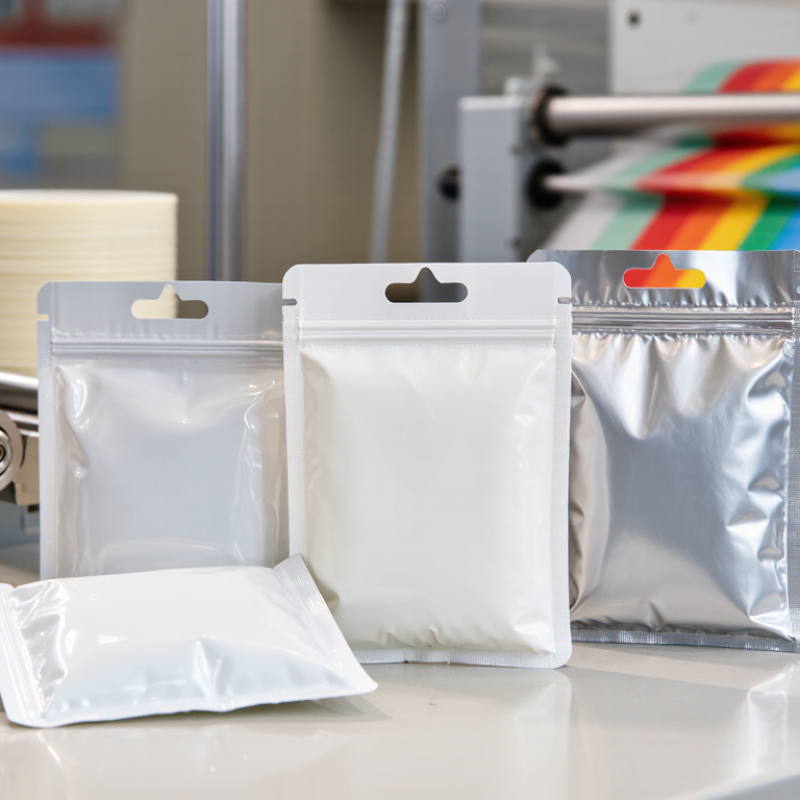
Flat Pouch Packaging: Formats and Typical 70–180 μm Film Thickness
What Is Flat Pouch Packaging and How Does It Work?
Flat pouch packaging is a flexible bag made from one or more sealed film layers. Common formats include three-side-seal pouches, flat-bottom sachets, and spouted pouches. The film is formed, filled, and heat-sealed along selected edges. A controlled seal protects the contents from leakage, air, moisture, or contamination.
Typical film thickness ranges from 70 to 180 μm. Lightweight pouches often use films near 70–100 μm for dry powders, snacks, or small portions. Heavier structures may reach 120–180 μm when products need stronger puncture resistance or improved barrier protection. Thickness alone does not guarantee performance. A well-designed 90 μm structure can outperform a poorly matched 150 μm film. Seal temperature, layer compatibility, filling speed, and storage conditions all matter. In practice, teams sometimes focus too much on thickness. That is worth reconsidering.
Tips: Match the film structure to the product, not just the pouch shape. Request seal-strength and leak testing before production. Check the pouch after filling, especially around corners and spouts. A small crease can become a failure point. For heat-sensitive contents, review the sealing window carefully. Practical testing remains essential because laboratory results may not reflect transport handling or humid storage.
What Is Flat Pouch Packaging and How Does It Work? - Flat Pouch Packaging: Formats and Typical 70–180 μm Film Thickness
Typical flat-pouch formats, film structures, functions, and performance considerations
| Format / Structure | Typical Film Thickness | How It Works | Common Applications | Key Advantages | Important Considerations |
|---|---|---|---|---|---|
| Three-side-seal pouch | 70–140 μm | A web of flexible film is folded or paired, then heat-sealed along the two sides and bottom. The top remains open for filling before the final seal. | Powders, dry foods, snacks, seeds, small consumer goods, and single-use portions | Simple construction, efficient material use, easy filling, and broad compatibility with vertical or horizontal form-fill-seal equipment | Seal strength depends on film selection, sealing temperature, pressure, dwell time, and product contamination in the seal area |
| Four-side-seal pouch | 80–160 μm | The package is sealed independently on all four edges, creating a flat, framed pouch with a defined perimeter seal. | Medical and hygiene products, sachets, powders, wet wipes, and premium sample packs | Good presentation, stable dimensions, clear separation between product and seal, and strong protection against leakage when properly designed | Uses more seal area than a three-side-seal pouch and may require tighter registration and sealing control |
| Center-back-seal pillow pouch | 70–130 μm | A continuous film forms a tube around the product. A longitudinal back seal and transverse end seals create the finished pouch. | Biscuits, confectionery, dried foods, snack products, and lightweight non-food items | High production speed, efficient rollstock use, and suitability for continuous packaging lines | The back seal can affect appearance and may require careful control of film tracking and seal overlap |
| Flat sachet with tear notch | 70–120 μm | A pre-scored or laser-weak area initiates opening when the user tears the pouch from a designated notch. | Sauces, condiments, creams, powders, personal-care samples, and single-use liquids | Low material consumption, compact size, convenient dosing, and easy distribution | Tear performance must balance easy opening with resistance to accidental rupture during transport |
| High-barrier laminated pouch | 90–180 μm | Multiple layers combine sealing, mechanical strength, printability, and resistance to oxygen, moisture, light, or aroma transfer. | Coffee, dried foods, oxygen-sensitive products, pharmaceuticals, and aroma-sensitive goods | Improved shelf-life protection and stronger resistance to pinholes, puncture, and environmental exposure | Barrier performance depends on the complete structure, humidity, temperature, seal integrity, and package design—not thickness alone |
| Metalized-film flat pouch | 80–150 μm | A thin metallic coating reflects light and can reduce transmission of oxygen, water vapor, and aroma when combined with suitable polymer layers. | Snack foods, powdered beverages, pet treats, and light-sensitive products | Light protection, attractive appearance, and increased barrier performance compared with a basic single-layer film | Metalized layers may reduce transparency and can be affected by flex cracking, abrasion, or unsuitable converting conditions |
| Retort flat pouch | 120–180 μm | A heat-resistant multilayer structure withstands commercial thermal processing after filling, provided the seals and laminate are designed for retort conditions. | Shelf-stable ready meals, sauces, soups, and other heat-processed foods | Lower package weight and volume than many rigid containers, with efficient storage and distribution | Requires validated thermal resistance, dimensional stability, seal durability, and process-specific testing |
| Spouted flat pouch | 100–180 μm | A fitment or spout is integrated into the pouch and sealed in place, allowing controlled dispensing and optional reclosing. | Purees, sauces, liquid detergents, beverages, and personal-care products | Convenient dispensing, reduced spillage, and potentially lower packaging volume than rigid bottles | The fitment seal is a critical leakage point and must be tested for torque, drop resistance, pressure, and compatibility with the contents |
| Mono-material polyolefin pouch | 80–160 μm | The main layers are based on compatible polyolefin materials to simplify material identification and support applicable recycling pathways. | Dry foods, household products, personal-care items, and selected flexible-packaging applications | Potentially simpler material composition and good heat-sealing performance | Actual recyclability depends on local collection, sorting, recycling infrastructure, additives, inks, coatings, and package design |
Note: Thickness ranges are typical reference values for finished flexible-pouch structures. The appropriate specification depends on product weight, filling method, distribution conditions, required shelf life, barrier targets, and applicable regulations.
Related Posts
-

7 Innovative Ways to Enhance Your Liquid Pouch Packaging Experience
-

Innovative Solutions for Printed Food Pouches in Modern Packaging
-
10 Best Food Pouch Packaging Suppliers for Global Buyers
-
Why Choose Flat Pouch Packaging for Your Business Needs?
-
Ultimate Guide to Selecting the Best Coffee Packaging Bags for Global Sourcing Success
-
Unlocking Industry Standards for Best Personalized Packaging Bags and Why They Matter