Why Choose Biodegrade Pouches for Global Packaging?
Global packaging is under pressure to reduce fossil-based waste without sacrificing product protection. Biodegrade Pouches offer a practical direction for brands shipping snacks, powders, cosmetics, and household goods. They can use plant-derived or biodegradable polymer structures, depending on the supplier and application.
Real packaging experience reveals an important detail. Not every pouch biodegrades in a garden. Some require controlled industrial composting, specific moisture, and sustained heat. Dr. Ramani Narayan, a respected bioplastics researcher at Michigan State University, states, “Biodegradability is a function of the environment and time.” That warning deserves attention. The word “biodegradable” is not a complete performance claim.
A reliable Biodegrade Pouches strategy begins with evidence. Brands should review material composition, barrier performance, seal strength, shelf-life testing, and credible certification. A pouch may look sustainable while failing against oxygen, humidity, or shipping stress. That creates waste, not progress. It can also confuse consumers when disposal instructions are unclear.
Global markets make the decision more complex. Collection systems differ sharply between cities, regions, and countries. A pouch accepted in one composting network may require another disposal route elsewhere. Better designs therefore match local infrastructure, product needs, and verified environmental claims. Small details matter: a dry powder pouch needs moisture resistance, while a fresh product may demand stronger oxygen protection. Biodegrade Pouches are promising, but they are not a universal answer. Their value depends on honest design, measurable testing, and realistic end-of-life planning.
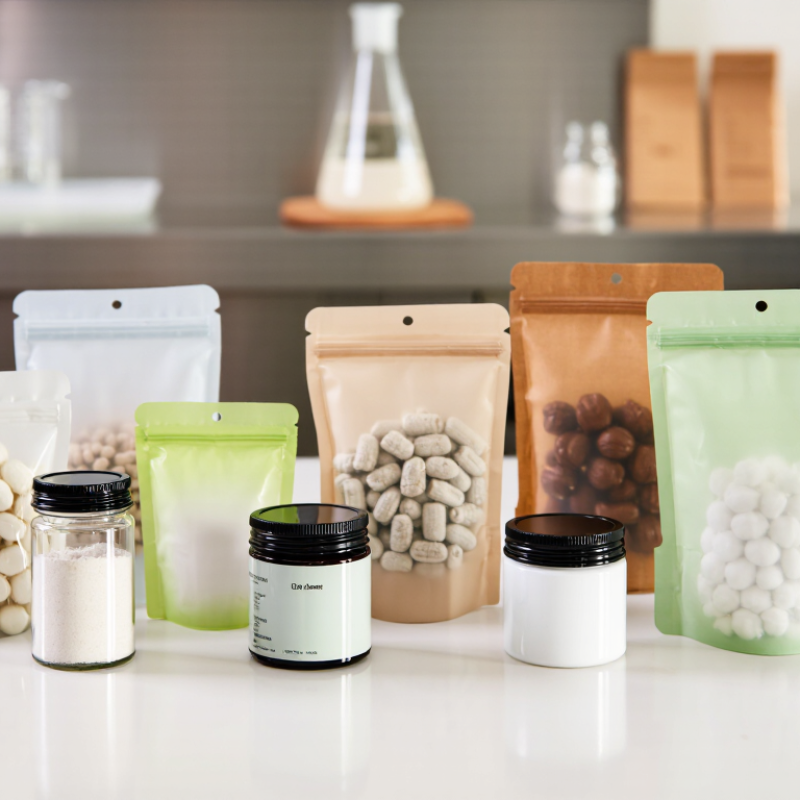
What Are Biodegradable Pouches?
Biodegradable pouches are flexible bags designed to break down through biological activity. They may use cellulose films, starch blends, bio-based polymers, or other engineered materials.
“Bio-based” describes the feedstock, not the end-of-life behavior. That distinction matters.
Some pouches require industrial composting, with controlled heat, moisture, and microbial activity. Standards such as ASTM D6400 and EN 13432 assess biodegradation, disintegration, and ecological safety in managed composting conditions. They do not guarantee quick breakdown in oceans, landfills, or home compost bins.
According to European Bioplastics and nova-Institute’s 2023 market update, global bioplastics production capacity reached about 2.18 million tonnes in 2023. The report projects approximately 7.43 million tonnes by 2028. This growth suggests expanding material options, but it does not replace careful testing.
For global packaging, assess barrier performance, seal strength, shelf life, and local waste facilities. Humidity testing can expose weak seals. Printing layers may also affect compostability.
A thinner pouch might reduce material use, yet disposal conditions remain a difficult question.
Biodegradable is not automatically better. The claim becomes credible when the material, certification, and disposal route match the pouch’s real destination.
How Are Biodegradable Pouches Made?
Biodegradable pouches begin with carefully selected materials, not ordinary plastic. Common options include cellulose films, starch blends, PLA, and certified compostable polymers. Each material affects strength, moisture resistance, shelf life, and disposal requirements. The details matter.
Manufacturers first dry and blend the raw materials under controlled conditions. The mixture is then heated and formed into a thin film. Some films are cast, while others are produced through extrusion. After cooling, the film is printed with low-migration inks. Layers may be bonded with compatible adhesives to improve barrier performance. Heat-sealing creates the pouch shape and closes its edges. Machines must control temperature, pressure, and sealing time closely. Small changes can cause leaks or weak seams.
Quality checks usually include thickness measurement, seal testing, tear resistance, and barrier testing against oxygen and moisture. Independent laboratories can also assess biodegradation under defined composting conditions. A pouch marked biodegradable may require industrial composting, rather than a home compost bin. This distinction is easy to miss. It should be stated clearly.
A practical review should examine the entire package, including inks, adhesives, and closures. A bio-based film alone does not guarantee complete biodegradation. The difficult truth is that sustainable packaging still involves trade-offs. Some biodegradable structures have shorter storage lives or higher production costs. Better designs come from testing real products, climates, and handling conditions instead of relying on attractive material claims.
Why Choose Biodegradable Pouches for Global Packaging?
How Are Biodegradable Pouches Made?
Biodegradable pouches are typically produced by converting compostable polymers or bio-based films into a flexible web, followed by printing, laminating, pouch forming, and heat sealing. For finished packaging, EN 13432 and ASTM D6400 require approximately 90% biodegradation within 180 days and disintegration within 12 weeks under controlled composting test conditions. Actual performance depends on the material structure and local composting facilities.
What Environmental Benefits Do They Provide?
Why Choose Biodegradable Pouches for Global Packaging?
What Environmental Benefits Do They Provide?
Biodegradable pouches can reduce long-term plastic persistence when suitable conditions exist. Their flexible structure often uses less material than rigid containers. That can lower packaging weight during shipping. Fewer truckloads may also reduce transport-related emissions. The OECD’s Global Plastics Outlook reports that global plastic waste reached 353 million tonnes in 2019. Only 9% was recycled. These figures show why packaging design needs practical alternatives.
Some biodegradable pouches break down through industrial composting, not ordinary soil or seawater. Clear disposal instructions are essential. Without proper heat, moisture, and microorganisms, decomposition may slow greatly. The United Nations Environment Programme’s 2023 Turning off the Tap report says plastic pollution could fall by 80% by 2040 through reuse, recycling, and redesign. Biodegradable formats support redesign, but they cannot replace collection systems.
Material selection still requires careful testing. Certifications, barrier performance, shelf life, and local composting access all matter. A pouch that spoils food creates another environmental problem. This is easy to overlook. Life-cycle assessments should measure production, transport, use, and disposal together. In my experience, the strongest packaging decisions combine lower material use with verified end-of-life routes. The “green” label alone proves very little. Feedback from waste operators can reveal gaps that laboratory tests miss.
How Do They Perform in Global Packaging Applications?
In global packaging applications, biodegradable pouches perform best when product conditions guide material selection. A dry snack may need oxygen and moisture barriers. A liquid product demands stronger seals and puncture resistance. During ocean freight, heat, humidity, and compression can expose weak structures. We have seen attractive pouches lose shape after rough handling. That detail matters. Performance starts with shelf-life testing, not appearance. Laboratories can measure seal strength, water-vapor transmission, oxygen transmission, and drop resistance. Results should match the intended route and storage period. A pouch designed for a cool warehouse may struggle in tropical distribution. It is not a small difference.
Reliable suppliers should provide traceable material data, test methods, and disposal guidance. Biodegradable does not mean the pouch disappears in every environment. Some materials require controlled industrial composting, while others degrade slowly in soil or landfill conditions. Local collection systems vary widely. Therefore, packaging teams should check accepted facilities before making environmental claims. Labels also need clear language and evidence supporting regional requirements. This can feel less convenient, but it prevents misleading communication. One limitation deserves attention: bio-based content and biodegradability are not the same feature. A pouch may use renewable feedstock yet remain persistent after disposal. Pilot shipments can reveal seal failures, scuffing, or moisture pickup that laboratory trials miss. Feedback from converters, logistics teams, and end users improves the next design. Sometimes, the better pouch uses less material, not more biodegradable material.
What Should Businesses Consider Before Choosing Them?
Why Choose Biodegradable Pouches for Global Packaging?
Before choosing biodegradable pouches, businesses should examine the full packaging system. “Biodegradable” does not always mean rapid breakdown in soil or seawater. Some materials require industrial composting, controlled heat, moisture, and specialist facilities. These conditions may not exist in the destination market.
Product protection deserves equal attention. Test the pouch against humidity, oxygen, oil, light, and transport pressure. A pouch that fails during a six-week shipment creates waste, returns, and customer complaints. Production trials should check seal strength, filling speed, print adhesion, and compatibility with existing machinery. Small changes can affect the entire line.
Supply chains also need closer review. Ask suppliers for material specifications, independent test results, and clear disposal guidance. Check whether local authorities accept the pouch in composting or recycling streams. Certification can support credibility, but it cannot replace practical testing. Cost matters too, especially when renewable materials require different storage or sealing temperatures. The cheaper option may become expensive after production delays. Some sustainability claims still sound attractive while remaining difficult to verify. Businesses should admit that uncertainty and improve their decisions with measured data. A careful choice protects the product, the customer, and the credibility of the company.
