
Beauty packaging is changing, but a greener label does not tell the whole story. Biodegradable Cosmetic Packaging can include materials designed to break down under particular conditions, and those conditions matter. A carton, bottle, or cosmetic jar may behave differently depending on its material, coatings, closures, and local waste facilities. Small details count. A pump, for example, can combine several components that are difficult to separate. Suppliers should explain what each part contains and how it is intended to be handled after use.
This guide introduces leading biodegradable cosmetic packaging suppliers worldwide and the practical questions brands can ask before choosing one. Look for clear material specifications, relevant test information, product samples, and guidance on compatibility with creams, oils, or other formulas. Ask how packaging performs during filling, shipping, and everyday use—not only how it looks on a product page. Supplier claims deserve careful review. A material described as biodegradable may require specific conditions, and that distinction should be easy to verify. No option is perfect. Some designs may trade familiar finishes for simpler material structures, while others may need more testing before launch. Comparing evidence, service, and real-world fit can help brands make a more informed choice.
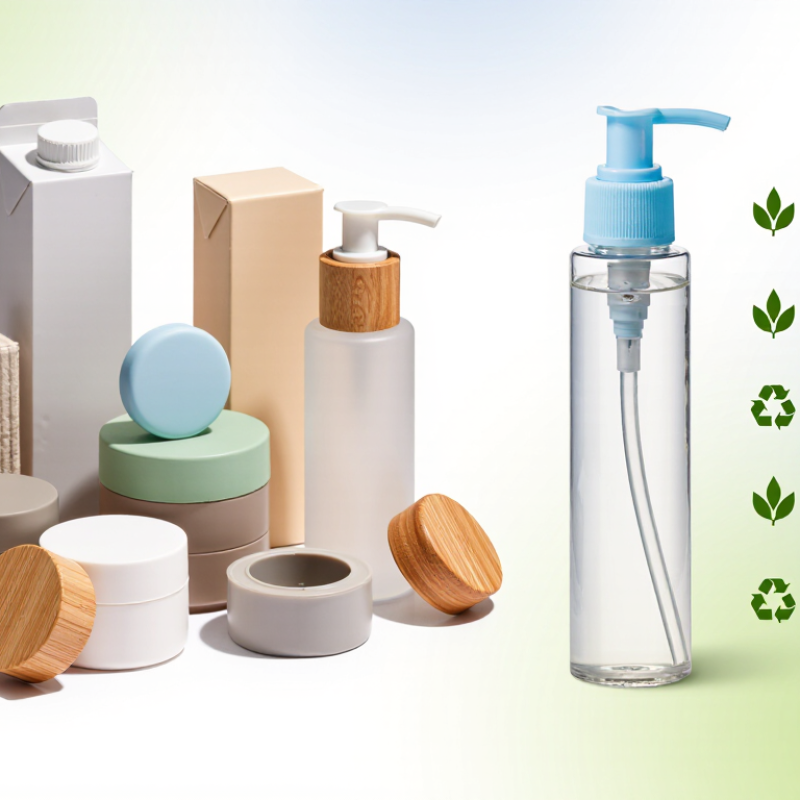
Biodegradable cosmetic packaging includes containers and components designed to break down through biological processes under defined conditions. Examples may include paper cartons, molded-fiber inserts, and certain plant-based plastics used for jars, tubes, or films. A carton can hold a cream jar, while a fiber insert keeps a glass bottle from shifting in transit. Small parts matter, too. Labels, adhesives, coatings, and closures can affect whether the whole package breaks down as intended.
“Bio-based” does not automatically mean biodegradable. Some materials come from renewable feedstocks but persist in the environment, while some biodegradable materials require specific treatment conditions. The boundary is not always neat. A package described as compostable may need an industrial facility, rather than a backyard compost heap, to break down reliably. Buyers should check what conditions the material needs and whether testing applies to the finished package, not just its raw material. Look closely at pumps, liners, and decorative coatings; these are easy to overlook. Clear material specifications and credible test documentation make comparisons more dependable, although local waste services may still lack suitable processing options.
Paperboard and molded fiber are common choices for outer cartons, trays, and protective inserts. They can feel sturdy in the hand, yet their performance depends on fiber quality and surface treatments.
A carton holding a serum bottle may need a moisture-resistant coating. That coating can affect how the package breaks down, so material claims deserve careful checking. Small details matter.
Plant-based plastics, including PLA and PHA, can be shaped into jars, caps, and sample containers. Their performance varies with heat, product oils, and storage time.
Some require specific industrial composting conditions, which may not be available locally. Starch-based blends can also reduce reliance on conventional plastic, but they may absorb moisture or lose strength.
Testing the filled package is essential; an empty sample tells only part of the story.
Aluminum and glass are not biodegradable, but they can support refill or reuse systems when designed well. They may also protect sensitive formulas from light and air.
The label can sound reassuring; the disposal route is less tidy. In practice, packaging teams need to balance material sourcing, product protection, and realistic local waste options.
A paper sleeve that stays clean and a cap that separates easily can make disposal less confusing.
Biodegradable packaging suppliers help beauty teams turn sustainability goals into workable jars, tubes, and cartons. They assess a product’s formula, shelf life, and dispensing needs before recommending materials. An oil-rich balm may soften some plant-based plastics, while a watery lotion can require stronger moisture protection. Small details matter: cap threads, pump components, label adhesives, and how a package feels in a wet hand.
Good suppliers support more than material sourcing. They create prototypes, check compatibility with filling equipment, and arrange tests for leakage, odor transfer, and product stability. They may advise on paper-based sleeves, molded fiber inserts, or compostable films while clearly explaining their limitations. Not every material suits every formula. Some options need industrial composting, and local facilities may not accept them. That gap deserves plain language on packaging.
Reliable service includes documentation, consistent production, and practical end-of-life instructions. Beauty teams should ask what conditions a material needs to break down and whether independent test reports cover the finished package, not just its raw material. A promising sample may perform poorly after months in a humid bathroom. That happens. The best partnership allows retesting and design changes, while being honest about trade-offs between product protection, appearance, and disposal.
Leading biodegradable cosmetic packaging suppliers worldwide do more than offer jars and tubes. They help buyers match materials to formulas, filling lines, and disposal conditions. A compact sample kit can reveal practical issues: a cap that loosens, a label that wrinkles, or a jar that feels too soft after handling. These small tests matter. Packaging performance depends on the whole design, not just the material name.
Experienced suppliers should explain what their packaging is made from and what conditions support its breakdown. Ask for material specifications, test documentation, and clear guidance on coatings, inks, and adhesives. “Biodegradable” alone is not enough detail. Requirements and waste systems vary by destination, so buyers should check local expectations before making claims. Samples should also be tested with the intended cosmetic formula; oils and moisture can change how some materials behave.
Global sourcing adds another layer. Compare minimum order quantities, lead times, shipping protection, and the supplier’s ability to repeat a specification consistently. Request a production sample, not only a polished showroom piece. Be candid about limitations. A supplier may offer a promising material, yet lack long-term performance data for a particular product. That gap deserves a question, not a guess. No option is perfect, and careful verification can prevent costly surprises.
Regional distribution of global bioplastics production capacity, 2023
Asia accounted for the largest share of reported bioplastics production capacity in 2023. This regional view offers context for the worldwide supplier landscape; it is not a ranking of cosmetic packaging suppliers. Bioplastics include both biodegradable and non-biodegradable materials, so these figures do not represent biodegradable packaging capacity alone. Shares are rounded.
Source: European Bioplastics and nova-Institute, Bioplastics Market Development Update 2023.
Comparing biodegradable cosmetic packaging suppliers takes more than checking a product label. Ask what the material is made from, which parts are included, and what disposal conditions it requires. A bottle may use plant-based plastic, while its pump, liner, or coating follows a different path. Small details matter.
Request current test reports and certificates, then check whether they apply to the exact packaging you plan to buy. Look for the tested material, conditions, and timeframe. “Compostable” may refer to industrial facilities, not a backyard compost pile. Vague wording is a reason to ask for clarification, not proof of a problem. Verify the supplier’s sourcing records and ask how batches are tracked. A polished document alone is not enough.
Compare practical performance, too. Request samples and test them with your actual formula, labels, and filling process. Check for leaks, warping, odor changes, and damage after shipping. Ask about minimum order quantities, production capacity, and lead times; a promising sample means little if repeat orders vary. If possible, review the factory’s quality procedures or arrange an independent assessment. Even a careful checklist can miss something. Packaging claims are easy to repeat, but harder to verify across every component.
Top Biodegradable Cosmetic Packaging Suppliers Worldwide - How to Compare Suppliers and Verify Sustainability Claims
Supplier-neutral comparison framework: This table compares packaging material categories and verification criteria, not individual suppliers or brands. A material being bio-based does not, by itself, mean that it is biodegradable or compostable. Claims should be checked against the exact finished packaging item and the disposal conditions available to customers.
| Packaging option | Typical cosmetic applications | Evidence to request from a supplier | Important limitations to check | How to compare offers |
|---|---|---|---|---|
| Paperboard and uncoated paper | Folding cartons, sleeves, labels, and secondary packaging. | Fiber-source documentation; chain-of-custody evidence where responsible forestry is claimed; specifications for coatings, inks, adhesives, and recycled content. | Paper fiber can be recyclable, but coatings, laminates, adhesives, and product contamination can affect recycling. Paper packaging is not automatically suitable for composting. | Compare recycled-fiber content, material weight, protective performance, and whether local paper-recycling systems accept the complete item. Treat forestry sourcing and compostability as separate claims. |
| Molded fiber | Protective inserts, trays, and some dry-product or secondary-packaging formats. | Fiber composition, surface-treatment details, and test or certification documents covering the finished item if compostability is claimed. | Water-resistant treatments and attached components may change recyclability or compostability. A claim for the base fiber does not necessarily cover the complete package. | Compare fit and protection, fiber sourcing, additives, and the disposal route supported by the finished-product evidence. |
| PLA (polylactic acid) | Selected jars, tubs, films, and other rigid or flexible formats, depending on grade and design. | Certification or test reports identifying the exact product, thickness, components, and composting conditions. Ask whether the claim concerns industrial or home composting. | Compostability is product- and condition-specific. Industrial compostability does not establish home compostability, and local facilities may not accept PLA. | Compare the complete package against the intended disposal route; check caps, labels, inks, and adhesives separately or as part of a certified item. |
| PHA (polyhydroxyalkanoate) | Selected films, coatings, and molded formats, subject to the material grade and supplier capability. | Grade-specific composition and biodegradation or compostability test evidence stating the tested environment and conditions. | Biodegradation performance varies with the material formulation and environment. Do not infer performance in soil, freshwater, or marine environments from a compostability claim. | Compare test scope, finished-item coverage, performance requirements, and the disposal environment explicitly supported by the evidence. |
| Bio-based polyethylene (bio-based PE) | Bottles, tubes, caps, and other formats that use polyethylene packaging designs. | Evidence supporting the stated bio-based content and documentation identifying the polymer and package components. | Bio-based describes feedstock origin, not end-of-life behavior. Bio-based PE is not inherently biodegradable and generally has the same polymer identity as conventional PE. | Compare verified bio-based content and package performance separately from recyclability. Confirm acceptance with the relevant local recycling system. |
| Refillable glass or metal (non-biodegradable comparison option) | Durable primary containers designed for reuse or refill programs. | Material specifications, durability testing, refill-system details, and clear instructions for reuse and end-of-life handling. | These materials are not biodegradable. Their environmental performance depends on factors such as reuse frequency, transport, breakage, and local recycling access. | Use as a comparison when evaluating alternatives to single-use packaging; compare the actual refill system and expected use pattern rather than material claims alone. |
| Finished-item compostability claim | Any package marketed as compostable, including packages made from fiber or compostable polymers. | Ask for a current certificate or test report that identifies the exact item and scope. EN 13432 addresses packaging recoverable through composting and biodegradation; ASTM D6400 covers plastics designed for aerobic composting in municipal or industrial facilities; ISO 14855-1 describes a method for measuring ultimate aerobic biodegradability under controlled composting conditions. | A test method is not, by itself, a product certificate or proof that local waste facilities accept the item. Industrial-composting evidence should not be presented as home-composting evidence. | Check certificate validity, product identification, tested components, conditions, and the disposal wording allowed by the supporting document. |
| Environmental and sourcing claims | Claims such as “recyclable,” “compostable,” “biodegradable,” “bio-based,” or “responsibly sourced.” | Request the claim’s definition, supporting records, testing scope, chain-of-custody evidence where relevant, and a description of the applicable disposal or sourcing system. | ISO 14021 covers self-declared environmental claims; a claim still needs appropriate substantiation. A sourcing certification does not establish biodegradability, and a bio-based-content claim does not establish compostability. | Compare like-for-like claims with matching definitions and scopes. Prefer specific, qualified statements over broad claims without supporting evidence. |
