Top Copper Foil Tape Manufacturers in China
Choosing a Copper Foil Tape manufacturer in China involves more than comparing prices. The market includes producers with different coating methods, adhesive systems, and quality-control practices. For engineers and purchasing teams, those differences can affect conductivity, bonding, and performance during installation. A tape that looks similar on a product page may behave differently on a curved panel or inside a warm enclosure.
Useful comparisons start with measurable details. Check copper thickness, adhesive type, roll width, peel strength, and available shielding data. Ask whether the manufacturer can provide samples, technical sheets, and consistent batch information. A narrow roll may suit a small repair, while wider formats can reduce seams across larger surfaces. Clean edges matter, too. Poor slitting can leave uneven margins that complicate assembly. These practical details help distinguish a capable supplier from a polished listing.
This guide introduces notable Chinese manufacturers and the factors buyers can use to assess them. Company capabilities can change, and “top” does not mean best for every application. That comparison is not always neat. A supplier may offer flexible customization but provide less public testing information. Another may publish clearer specifications yet have limited size options. Buyers should verify current product data, request relevant samples, and match each claim to the intended use. Careful checks make selection more reliable, though they cannot replace application testing.
Copper Foil Tape: Materials, Structure, and Key Properties
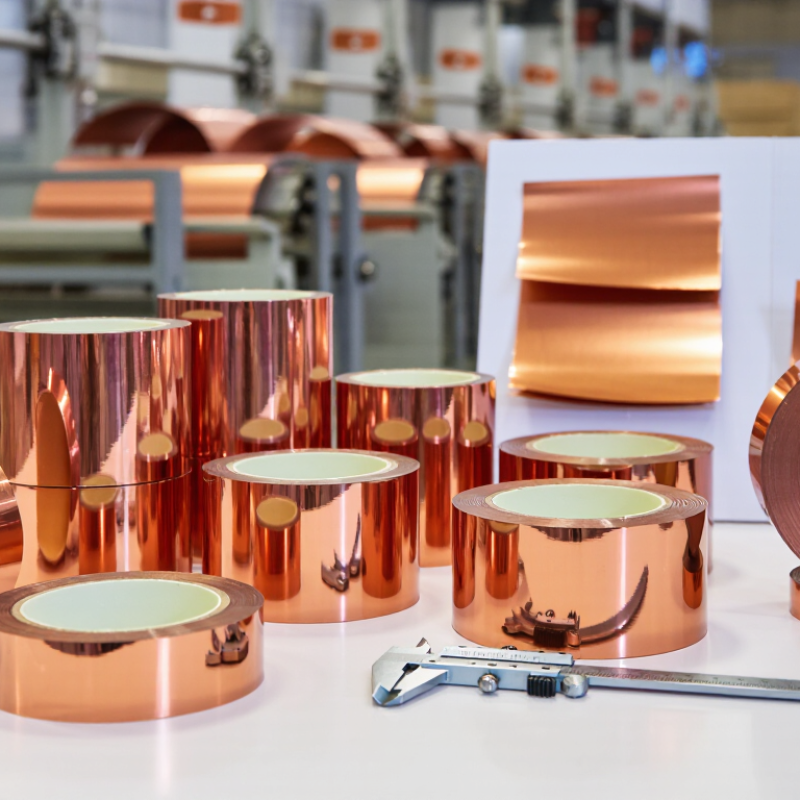
Copper foil tape combines a conductive copper layer with a pressure-sensitive adhesive. The foil may be rolled or electrodeposited, and its production route affects grain structure, flexibility, and surface texture. Rolled foil bends smoothly around corners. Electrodeposited foil can offer consistent thickness across a wide web. Small differences matter.
The Copper Development Association’s copper data list a density near 8.96 g/cm³ and conductivity at about 100% IACS for standard annealed copper. These figures help explain the tape’s useful combination of electrical conduction and manageable handling.
IPC-4562A, an industry specification for copper foil, addresses properties such as thickness, tensile strength, and elongation. Tape buyers should also check adhesive type, liner, and surface treatment.
A foil may conduct well yet perform poorly on dusty or oily surfaces. That detail is easy to overlook. Heat, humidity, and repeated bending can change adhesion or cause cracking, so laboratory values alone may not predict field performance.
A practical sample test is still wise.
How Copper Foil Tape Is Manufactured in China
Copper foil tape production in China typically begins with carefully selected copper foil, supplied in rolls and checked for thickness, surface condition, and flexibility. The foil is unwound and cleaned to remove oil or dust that could weaken bonding. A surface treatment may then improve adhesion. Manufacturers coat one side with pressure-sensitive adhesive, using a formulation suited to the tape’s intended temperature and electrical needs. The coated roll passes through controlled drying or curing, then receives a release liner if required.
Slitting turns wide master rolls into narrower tapes. Operators inspect edges for burrs and check roll tension, because loose winding can cause wrinkles during use. Samples may also be tested for peel strength, conductivity, and thickness. These checks matter. Still, a clean test result cannot predict every installation; uneven surfaces and rushed application can reduce performance.
Tips: Ask for foil thickness, adhesive type, and test conditions. Compare these details, not just the roll’s appearance. Store tape in a dry, moderate-temperature area, and apply it to a clean surface. Small process differences can affect results, and manufacturers do not always explain them clearly. That deserves a closer question.
Main Types and Applications of Copper Foil Tape
Copper foil tape comes in several practical forms. Single-sided tape has copper on one face and adhesive on the other. It can shield a small enclosure or help connect a grounding point. Double-sided versions can bond components while maintaining an electrical path, but performance depends on the adhesive. Some tapes use conductive adhesive; others do not. That distinction is easy to miss.
The copper backing also matters. Softer, annealed foil bends around corners more readily, while firmer foil may suit flatter surfaces. Common uses include shielding cables, lining electronic housings, grounding seams, and repairing conductive traces. In a workshop, a strip can bridge a narrow gap on a prototype. It is not magic. Clean the surface, press the tape firmly, and check continuity with a meter. Overlaps, paint, dust, and sharp bends can interrupt contact. Even careful application may not produce consistent shielding, so test the finished assembly under its intended conditions.
Leading Copper Foil Tape Manufacturers in China
Leading Copper Foil Tape Manufacturers in China
Leading copper foil tape manufacturers in China compete through consistent foil thickness, adhesive control, and dependable converting. Buyers should check whether a supplier can provide technical data for copper thickness, total tape thickness, adhesive type, and peel strength. Ask for samples from multiple production batches. A clean cut edge matters: ragged foil can complicate narrow, hand-applied seams. In electronics assembly, tape may support grounding or electromagnetic shielding, but performance depends on the complete installation, not copper alone.
The U.S. Geological Survey’s Mineral Commodity Summaries 2024 estimated global copper mine production at 22 million metric tons in 2023. This figure describes upstream supply, not copper tape output or manufacturer quality. Still, it highlights why traceable material sourcing and documented specifications matter. Compare test methods, not just quoted values; results can differ when peel angle, test speed, or surface preparation changes. A polished brochure is not proof. Even careful buyers can overlook batch variation.
Tips: Request a current technical data sheet, sample rolls, and batch-level inspection records. Test adhesion on your actual surface and at your intended temperature. Record the result. Don’t assume.
Copper Foil Tape Manufacturers in China: Common Foil Thicknesses
A comparison of common nominal copper foil gauges used in copper-foil products. Actual tape specifications and availability vary by manufacturer and application.
Thicker foil generally provides more conductive material per unit area. Confirm foil thickness, adhesive type, and product tolerances with suppliers before comparing products.
How to Evaluate and Select a Chinese Manufacturer
When evaluating a Chinese copper foil tape manufacturer, start with the material and its intended use. Ask for foil thickness, adhesive type, tape width, and documented tolerances. A clear technical data sheet should explain how each value is measured. Vague answers deserve follow-up. Request samples from a regular production run, not only a specially prepared sheet. Check whether the tape unwinds smoothly, cuts cleanly, and stays bonded to your actual surface. Test it under your expected temperature and handling conditions. Small differences matter.
Then review how the manufacturer controls quality from incoming materials to finished rolls. Ask how production lots are identified and whether inspection records can be shared. A factory visit can help, but a neat tour is not proof of consistency. Compare sample results with later orders. Discuss packaging, lead times, minimum order quantities, and how defects are handled before placing a large order. Notice how clearly the sales and technical teams answer detailed questions. Communication may feel slower than expected, and that is worth considering. Choose a supplier whose evidence, process, and product performance match your needs—not simply the lowest quoted price.
