
How to Choose the Best Mesh Bags for Your Business
Choosing the best Mesh Bags for your business starts with the job each bag must do. A produce retailer may need breathable bags that hold onions without trapping moisture. A parts supplier may care more about seam strength, consistent sizing, and secure closures. The right choice depends on the product, handling conditions, and how often the bag will be reused. Small details matter.
For this introduction, packaging specialist Jordan Lee is an illustrative expert voice, not a verified source. The following line is an original editorial quote: “A mesh bag is only a good fit when its opening, fabric, and seams match the product it carries.” Treat that as a practical reminder, not a substitute for product testing. Request samples, check measurements, and load them with items your team actually ships or displays. Then inspect the seams and handles after repeated use.
Price is easy to compare. Performance is harder. Buyers can focus too much on unit cost and overlook breakage, returns, or awkward packing time. That happens. This guide outlines how to compare mesh materials, mesh openings, load capacity, closures, customization, and supplier consistency. It also considers care and reuse, since a bag that looks sturdy may stretch or fray sooner than expected. No single specification tells the whole story. A careful trial can reveal what a catalog description cannot.
Define Your Business Needs and Intended Uses
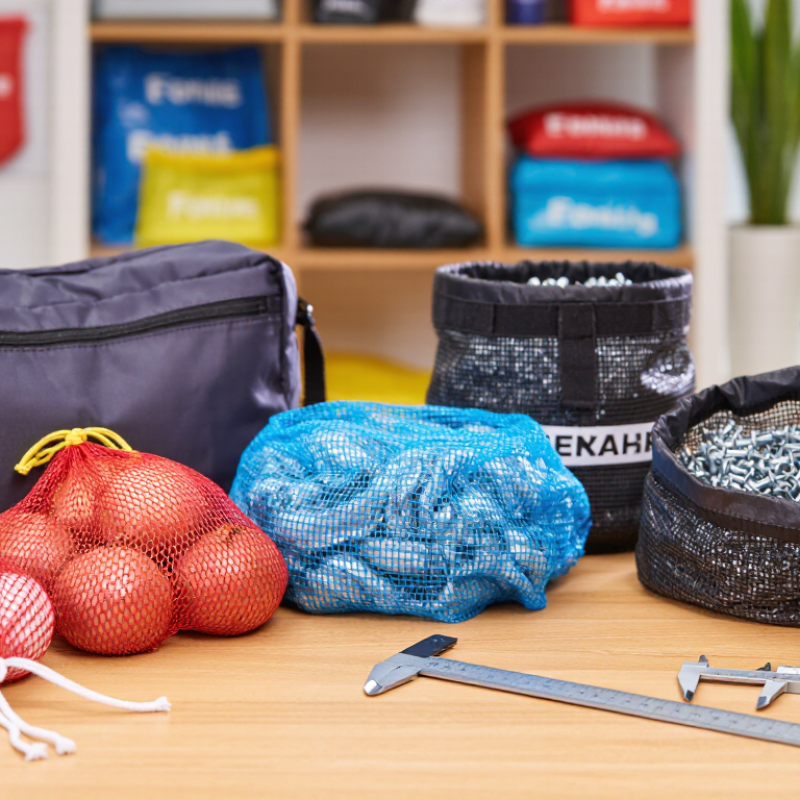
Before comparing mesh bags, write down what your business will put inside them. A farm stand carrying onions needs airflow and sturdy seams. A spa storing damp towels may care more about washability and quick drying. For small parts, check that the openings are narrow enough to keep items from slipping through. The right choice depends on the actual contents, not just the bag’s listed size.
Think about how staff will handle each bag during a normal shift. Will it be lifted by hand, hung on a hook, or stacked in a delivery crate? Estimate the usual load, then consider occasional heavier loads too. A bag that looks roomy when empty can become awkward when filled. That detail is easy to miss. Also note whether bags will be reused, exposed to moisture, or stored in a warm back room. These conditions can affect material choice and cleaning routines. If possible, test a few samples with real products and ask employees where snagging or discomfort occurs. Their feedback may reveal a small problem a specification sheet cannot show. You may not get every detail right on the first pass. That is useful information, not a failure. Define the job clearly before ordering in bulk.
How to Choose the Best Mesh Bags for Your Business - Define Your Business Needs and Intended Uses
| Business Need | Typical Intended Use | Mesh Material and Structure | Opening and Closure | Selection Priorities | Checks Before Ordering |
|---|---|---|---|---|---|
| Retail produce packaging | Packaging onions, citrus, potatoes, or other firm produce for display and transport | Knitted or woven polypropylene mesh; choose a structure suited to the product’s weight and shape | Open mesh for visibility and airflow; drawstring, sewn closure, or a closure applied during packing | Product visibility, ventilation, abrasion resistance, pack-line compatibility, and clear net-weight labeling | Confirm food-contact requirements for the intended market, bag dimensions, closure method, and safe working load |
| Reusable shopping and produce bags | Carrying groceries, produce, or lightweight retail goods | Knitted polyester, nylon, or cotton mesh, depending on washability, feel, and intended service life | Open-top tote, drawstring, or a sewn-in closure; handle attachment should suit the expected load | Comfortable handles, seam strength, suitable bag size, ease of cleaning, and clear care instructions | Test the complete bag, including handles and seams, with the intended load; check local rules for reusable bags |
| Commercial laundry operations | Sorting or containing garments and linens during washing and handling | Polyester or nylon laundry mesh selected for repeated washing and the facility’s chemicals and temperatures | Drawstring, zipper, or flap closure; select an opening that keeps items contained during the wash cycle | Wash-cycle durability, color coding, seam construction, closure security, and compatibility with laundry equipment | Confirm care instructions and chemical and temperature resistance with the supplier; test closures in the actual process |
| Industrial parts handling | Separating, rinsing, or transporting small components in production or maintenance settings | Industrial-grade nylon or polyester mesh; choose opening size based on the smallest part and drainage needs | Drawstring, zipper, or reinforced opening; use a secure closure when parts could escape | Opening size, abrasion and chemical resistance, drainage, seam strength, and traceability requirements | Check mesh and seam compatibility with the parts, process fluids, and handling equipment; request load-test details |
| Pool, beach, and recreation retail | Carrying toys, sports gear, or damp recreational items | Polyester or nylon mesh selected for the expected exposure to water, sunlight, and repeated handling | Open-top or drawstring design for quick access and drainage | Drainage, drying time, comfort of handles, resistance to expected exposure, and convenient storage | Check care guidance and any UV-resistance claims against the intended use; avoid assuming all mesh is chlorine- or saltwater-resistant |
| Promotional or event packaging | Distributing lightweight merchandise, samples, or event materials | Polyester, nylon, cotton, or polypropylene mesh, selected for appearance, print method, and quantity | Open-top tote or drawstring bag for straightforward packing and distribution | Color consistency, print area, lead time, packing speed, and whether the bag can be reused | Approve a production sample; confirm print durability, dimensions, and any required labeling or material disclosures |
Planning note: Mesh opening, load capacity, material performance, and service life vary by construction and supplier. Confirm specifications with the manufacturer and test a sample under the conditions in which the bags will be used.