
How to Choose the Best Custom Mailer Boxes Supplier in China?
Choosing the right Custom Mailer Boxes supplier in China requires more than comparing prices. Packaging affects product protection, brand perception, shipping costs, and customer satisfaction. A box may look attractive in a sample room, yet fail after stacking, humidity, or rough courier handling. Real performance matters.
Industry research supports this concern. McKinsey & Company’s 2020 report, “Sustainability in Packaging,” found that 60–70% of consumers may pay more for sustainable packaging. IBM’s 2020 consumer study also reported that 57% of respondents were willing to change purchasing habits to reduce environmental impact. These findings make recycled materials, accurate sourcing, and responsible production important supplier criteria. However, sustainability claims need evidence. Ask for material specifications, recycled-content details, and relevant certifications.
A dependable Chinese supplier should provide clear structural drawings, compression-test results, production samples, and consistent quality inspections. Check whether the factory controls paperboard sourcing, printing, die-cutting, and final assembly. Request photos of actual production lines, not only polished catalog images. Small details reveal experience: clean fold lines, firm magnetic closures, accurate colors, and cartons that stack without leaning. Price still matters. But an unusually low quote may hide weaker board, vague tolerances, or costly rework. This is where buyers can misjudge the market. I have seen attractive samples create false confidence. A pilot order, pre-shipment inspection, and written acceptance standards reduce that risk. Supplier selection should remain practical, evidence-based, and open to revision as order volumes grow.
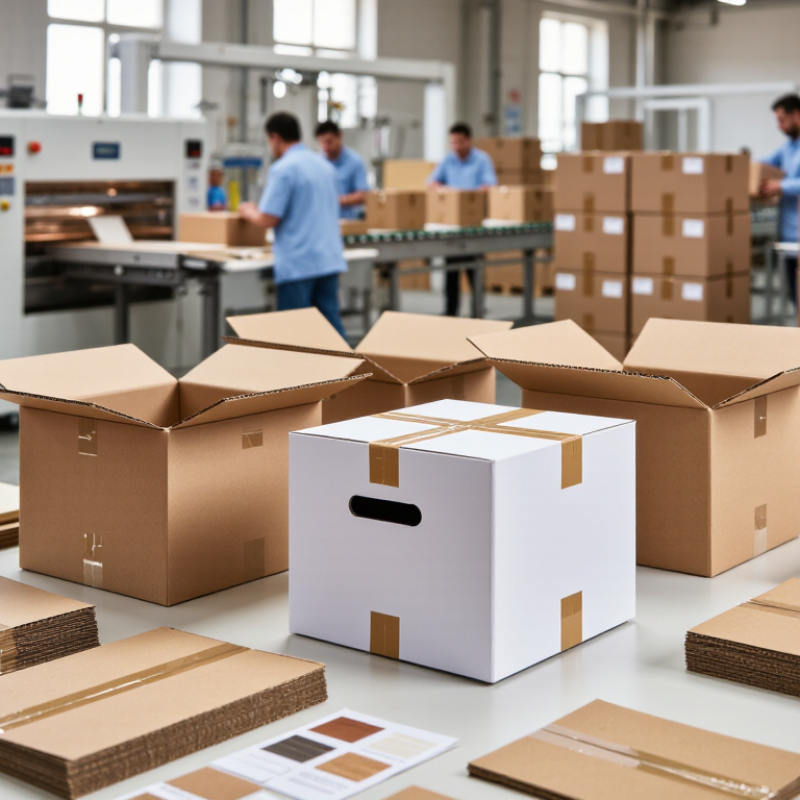
Define Your Custom Mailer Box Requirements and Budget
How to Choose the Best Custom Mailer Boxes Supplier in China?
Before contacting a supplier, define your box requirements clearly. Measure the product’s length, width, and height, including protective padding. An oversized box increases material use and shipping costs. A tight box may damage corners during delivery. Specify the box style, paper grade, color, printing method, finish, and insert design. For fragile products, request stronger board or reinforced edges. Share product photos, weight, and packing conditions. These details help the supplier recommend a practical structure instead of guessing.
Set a complete budget before comparing quotations. Include samples, tooling, printing plates, production, packing, freight, taxes, and possible storage fees. Ask for prices at several quantities, such as 500, 1,000, and 3,000 units. The lowest unit price may hide high setup costs or weak materials. Request a physical sample and a written specification sheet. Check dimensions, color accuracy, folding strength, and print alignment. A common mistake is budgeting only for production. I would also keep 10% for revisions or unexpected delivery changes. Plans are rarely perfect.
Tips: Send the same specification to every supplier. Ask about minimum order quantity, lead time, quality checks, and replacement procedures. Confirm whether the quoted price includes export packaging and delivery terms. A clear comparison prevents expensive misunderstandings.
How to Choose the Best Custom Mailer Boxes Supplier in China? - Define Your Custom Mailer Box Requirements and Budget
| Requirement Dimension | Recommended Specification | Indicative Planning Range | Supplier Evaluation Metric | Practical Notes |
|---|---|---|---|---|
| Box Style | Self-locking mailer box with dust flaps and roll-end construction | Standard structure for e-commerce packaging | Accurate dieline, secure closure, smooth folding | Request a physical sample to check whether the lid closes without excessive force. |
| Internal Dimensions | Measure the product, protective insert, and clearance before finalizing the dieline | Add approximately 3–8 mm clearance per side, depending on the product | Finished internal length × width × height matches approved sample | Oversized boxes increase material use, shipping volume, and product movement. |
| Paperboard Material | E-flute corrugated board for lightweight protection; B-flute for heavier products | Common basis weights: approximately 250–400 gsm liner and medium combinations | Board thickness, edge-crush performance, and dimensional consistency | Select board strength according to product weight and distribution conditions, not appearance alone. |
| Product Protection | Paper insert, molded-pulp support, corrugated divider, or protective wrapping when needed | Packaging insert may add roughly 5–25% to the box cost | Drop-test performance, abrasion control, and product fit | Test the complete packed product rather than the empty box only. |
| Printing Coverage | One-color exterior for cost control; full-color exterior or interior for stronger presentation | Printing cost commonly increases with coverage, color count, and finishing | Color consistency, registration accuracy, barcode readability | Approve a color proof or production sample before mass production. |
| Surface Finish | Uncoated kraft, matte coating, gloss coating, aqueous coating, or selective finishing | Finish selection may add approximately 3–15% to unit cost | Scratch resistance, tactile quality, and compatibility with recycling goals | Use coating or varnish only where it supports appearance or durability requirements. |
| Order Quantity | Set an initial quantity based on sales forecast, storage capacity, and design stability | Small production runs often cost more per unit; larger runs reduce setup cost per box | Minimum order quantity, quantity breakpoints, and overrun policy | Ask for quotations at several quantity levels, such as 500, 1,000, 3,000, and 5,000 units. |
| Target Unit Budget | Define a target range before requesting supplier quotations | Basic printed mailer boxes commonly range from about US$0.30–US$2.00 per unit, depending on size, quantity, board, and finish | Compare like-for-like specifications and total landed cost | A low unit price may exclude tooling, sampling, freight, duties, protective packaging, or inspection. |
| Sampling Budget | Order a structural sample and, when needed, a printed pre-production sample | Typical sample charges may range from about US$30–US$150, excluding delivery | Sample accuracy, revision process, and approval documentation | Confirm whether approved sample charges are credited against the production order. |
| Production Lead Time | Include artwork approval, sampling, manufacturing, inspection, and dispatch | Approximately 10–25 working days after final approval for many standard projects | Written production schedule and delay-management process | Complex inserts, special finishes, peak seasons, and large quantities can extend the schedule. |
| Quality Control | Define tolerances for dimensions, printing, board condition, and assembly performance | Use an agreed inspection standard and documented acceptance criteria | Pre-production approval, in-process checks, and pre-shipment inspection | Request inspection photos, carton counts, and a defect-handling procedure before placing the order. |
| Shipping and Landed Cost | Evaluate product price, export packing, freight, insurance, duties, taxes, and destination delivery | Freight can materially change the final cost because boxes are often bulky relative to their weight | Transparent quotation with clearly stated trade terms | Compare total landed cost rather than the factory unit price alone. |
| Sustainability Requirements | Use recyclable paper-based materials and minimize unnecessary coatings, plastics, and oversized packaging | Recycled content and specialty certifications may affect material availability and cost | Material documentation, recycled-content declaration, and responsible sourcing evidence | Confirm that sustainability claims apply to the actual board and finish used in production. |