How to Choose the Best Thermal Cash Register Paper?
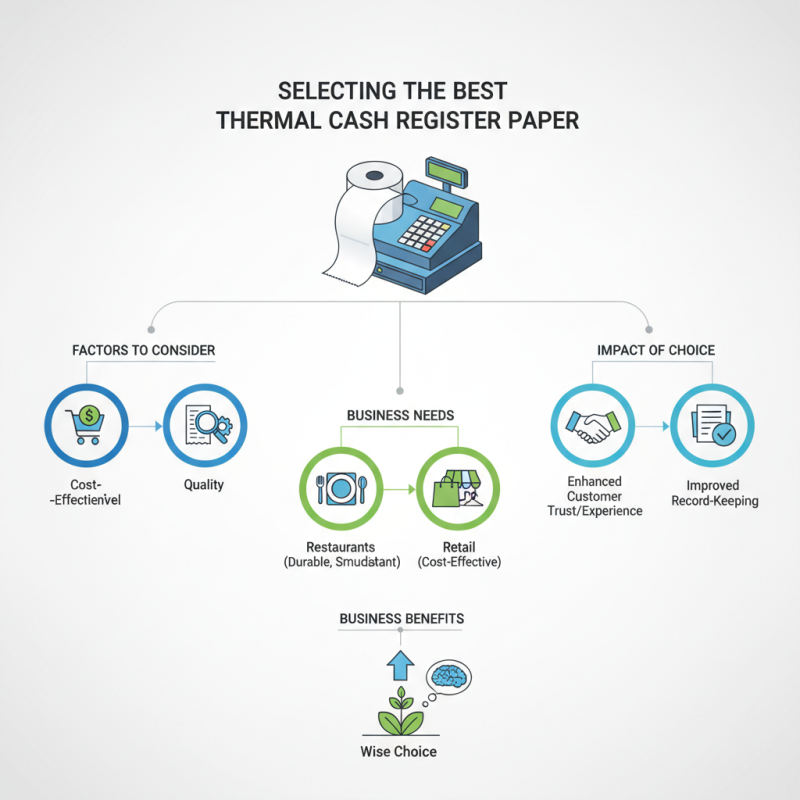
Selecting the right Thermal Cash Register Paper is crucial for businesses of all sizes. Expert Michael Reynolds, a leader in the thermal printing industry, states, “The right thermal paper ensures quality receipts, enhancing customer trust.” Choosing correct paper affects everyday operations.
Understanding the types of thermal cash register paper available is essential. Different businesses have unique needs. For example, a busy restaurant might require durable paper that resists smudging. On the other hand, a retail store may prioritize cost-effectiveness.
However, many overlook the importance of paper quality. Using cheap thermal cash register paper can lead to faded receipts. These issues may frustrate customers and hinder record-keeping. Reflecting on these factors is vital. Choosing wisely can enhance the customer experience, ultimately benefiting the business.
Understanding Thermal Cash Register Paper Types
When considering thermal cash register paper, it's essential to understand the various types available. Thermal paper can vary in chemical coating, size, and quality. The right choice affects print quality and longevity. Not all thermal paper is created equal. Some may fade quickly, while others might smudge.
Tips: Check the specifications of your cash register. Make sure to select paper that fits perfectly. Measure the roll width and length accurately. Think about the environment too. If your shop has high humidity, choose paper designed to resist moisture.
Different types of thermal paper suit different needs. For example, some papers are designed for long-term storage. Others prioritize high-speed printing. You may find that cheaper options show wear quicker. It’s frustrating when receipts become unreadable too fast.
Tips: Always test paper samples first. This way, you can see how well they print. Also, consider ordering small quantities before committing to larger orders. This approach helps avoid waste and ensures satisfaction.
Factors to Consider When Choosing Thermal Paper
When selecting thermal cash register paper, several key factors are essential. The quality of the paper matters. Low-quality paper can jam the printer and create a poor customer experience. Check the brightness and thickness. Bright paper offers better contrast, making printed text easy to read. Thickness affects durability. If the paper is too thin, it may tear easily.
Compatibility is crucial as well. Ensure that the paper fits your specific register model. Measure the width and diameter to avoid fitting issues. You might also consider roll length. Longer rolls require less frequent changing but may be bulkier to store.
Environmental impact cannot be overlooked. Some papers are more eco-friendly than others. They may be made from recycled materials or contain less harmful chemicals. It’s essential to evaluate these attributes, even if the perfect choice seems elusive. Balancing quality, compatibility, and environmental concerns can be a challenge, but it’s an important reflection for responsible consumers.
Compatibility with Cash Register Models
When selecting thermal cash register paper, compatibility with various cash register models is crucial. Many businesses overlook this detail, leading to costly errors. According to a recent report by the National Retail Federation, approximately 15% of retailers experience issues due to incompatible receipt paper. This often results in equipment malfunction and customer dissatisfaction.
Different cash register models have specific requirements for paper size and thickness. Common sizes include 57mm, 80mm, and 44mm widths. Using the wrong size can jam the printer, wasting both paper and time. A survey conducted by Retail Technology Solutions found that 40% of retailers admitted to occasionally using the wrong paper, impacting their operations negatively.
It’s also essential to consider the thermal sensitivity of the paper. Not all cash registers can handle various sensitivities. Low-quality paper can fade quickly, making transactions hard to read. In fact, studies show that over 25% of consumers encounter faded receipts within a month of printing. Businesses should regularly assess their compatibility with popular cash register models to avoid these pitfalls. Each choice impacts cash flow and overall customer experience significantly.
Evaluating Thermal Paper Quality and Performance
When evaluating thermal paper quality and performance, a few key factors come into play. The brightness of the paper matters. It impacts print clarity and visibility. Higher brightness often means better quality. Look for paper that offers sharp black images and clear barcodes. Checking the ink contrast is also essential. If ink smudges or fades quickly, it's an issue. Test samples to see how well they hold up over time.
Durability is crucial, too. Thermal paper can wear down and become unusable. Some papers may be sensitive to heat and light. If you expose them to high temperatures, they can turn black. Take time to test different products in various conditions. Always inspect the weight of the paper. Heavier paper tends to be more robust. Yet, lighter options can sometimes be more flexible.
The texture of the paper plays a role in performance. A smooth finish can enhance printing. However, some rough textures might hinder the process. It’s also worth considering the environment. Look for options that are eco-friendly but still durable. Finding the right balance can be challenging. Remember that trial and error may lead to the best solution for your specific needs.
Thermal Cash Register Paper Quality Evaluation
This chart shows the comparison of different quality attributes of thermal cash register paper such as Brightness, Thickness, and Sensitivity. Each attribute is evaluated on a scale of 1 to 10, where higher values represent better quality.
Cost-Effectiveness: Finding the Best Value for Money
When selecting thermal cash register paper, cost-effectiveness is essential. The price should reflect quality. Cheaper papers may save money upfront, but they often result in problems later. Consider the thickness and durability of the paper. Thinner rolls may jam in printers, causing delays.
It’s vital to assess the paper's print quality. Sometimes, lower-cost options lead to faded prints. In essential transactions, this could be a significant issue. Ensure that the paper you choose has clear, legible printing. Otherwise, you may face customer complaints.
Buying in bulk can be a smart way to cut costs. Prices tend to drop with quantity. However, consider storage space. Excessive stock might lead to waste if the paper expires or becomes damaged. Balancing cost and storage can be tricky. Always evaluate your needs carefully before committing.