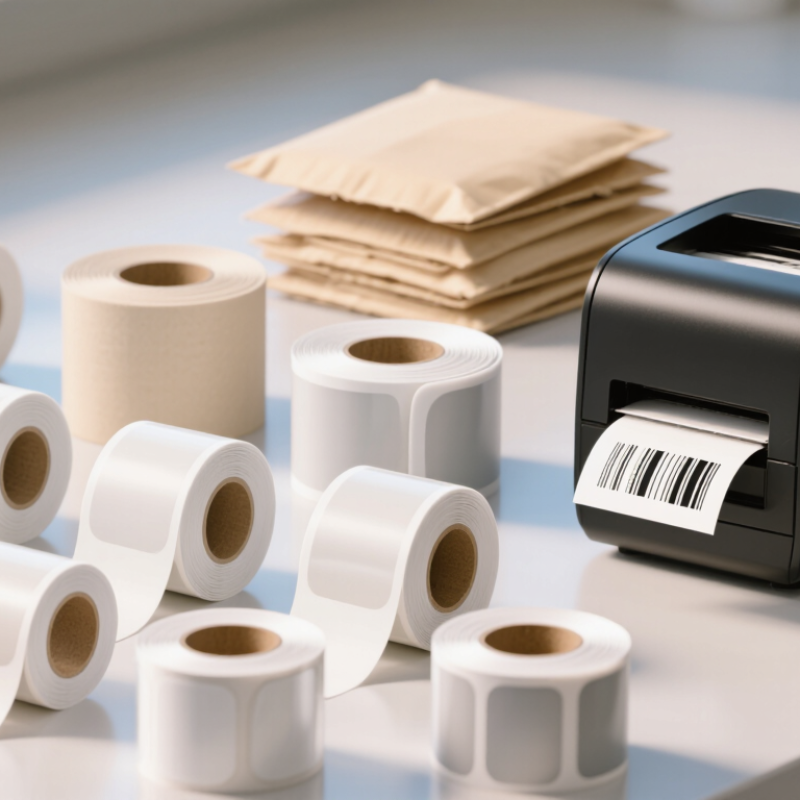
10 Best Thermal Sticker Labels for Shipping and Packaging

Thermal Sticker Labels may look like small details, but they carry important information through busy packing areas, courier hubs, and delivery routes. A barcode must scan cleanly. An address must remain readable after a box slides across a warehouse floor. The right label helps prevent avoidable relabeling and keeps packages moving.

This guide compares 10 Thermal Sticker Labels for shipping and packaging, with attention to print method, adhesive, label material, size, and printer compatibility. Direct thermal labels can suit short-term shipments, while thermal transfer labels may be a better fit when durability matters. Still, no label performs perfectly in every setting. Cold cartons, rough surfaces, moisture, and dusty storage can change how well labels stick or print. Testing a sample on your own packaging is a sensible step.

One point needs care: no source or verifiable expert quotation was provided, so I will not assign invented words to a named specialist. A useful selection principle is simple: match the label to the package, the printer, and the journey. Small details matter. The comparisons ahead explain what to check before buying, including roll or fanfold format, core size, print clarity, and adhesive performance. They also flag trade-offs, because a lower price may not mean lower overall cost if labels jam, peel, or need replacement. Use the list as a practical starting point, then confirm specifications with the supplier and test labels under real packing conditions.

10 Best Thermal Sticker Labels for Shipping and Packaging

Thermal Label Basics: 4 × 6-Inch Stock and 203-DPI Shipping Printers

A 4 × 6-inch label gives shipping details room to breathe. Its familiar layout can fit an address, tracking barcode, and handling information without crowding. Direct thermal stock darkens when heated, so it needs no ink ribbon. That keeps routine label changes simple. But the printed surface can fade with prolonged heat, sunlight, or friction. Store rolls in a cool, dry place.

Check the printer’s supported label width and roll format before buying. A 203-dpi printer is common for shipping labels and can produce readable text and barcodes when the artwork is sized and aligned well. Test a sample. Scan it. Look for pale lines, smudges, or clipped edges, especially near the barcode. A higher resolution is not always necessary, though tiny text may look less sharp at 203 dpi. I still inspect the first few labels after changing stock; settings can shift, and a test print is not a guarantee. Confirm that the adhesive holds on your packaging surface, too. Cardboard dust and cold, damp cartons can weaken the bond.

Direct Thermal vs. Thermal Transfer: Comparing Print Life and Durability

Direct thermal and thermal transfer labels can look nearly identical on a new parcel. Their print life differs. Direct thermal uses heat-sensitive coating, so it needs no ribbon. That keeps packing lines simple. But heat, sunlight, and rubbing can darken or fade the image. A label left on a sunny loading dock may become hard to scan sooner than one kept in a cool warehouse. There is a catch: no single lifespan applies to every direct thermal label, because coatings and storage conditions vary.

Thermal transfer uses a heated printhead and ribbon to place ink on the label. With a suitable ribbon and face stock, the image generally resists abrasion, moisture, and fading better, making it a stronger choice for long storage or rough handling. Test the actual combination. A brittle label surface or mismatched ribbon can still produce poor results.

For shipping labels, scan reliability matters as much as visible darkness. ISO/IEC 15416:2016 grades linear barcode print quality on a 0.0-to-4.0 scale; the grade reflects a verified print sample, not guaranteed shelf life. Check labels after rubbing, warm storage, and exposure to light. A small test batch is useful. It is not perfect, but it can reveal whether a barcode still scans after real handling.

Ten Leading Thermal Sticker Labels Compared by Adhesive, Size, and Compatibility

The 2023 Parcel Shipping Index counted 161 billion parcels worldwide in 2022 and projected 256 billion by 2027. That growth makes label selection more than a price decision. The ten leading thermal sticker labels should be compared by adhesive, dimensions, and printer fit. Adhesive matters at the corners: a carton moving through a cold warehouse may need a stronger bond than a smooth mailer. Fit matters.

Size affects scanning and packing speed. A common 4-by-6-inch label leaves room for addresses and tracking codes, while smaller formats can suit compact parcels. But measurements alone are not enough. Check the printer’s maximum width, roll core, label gap, and sensing method before ordering. A label that feeds smoothly in one printer may skew in another.

Adhesive options include removable, general-purpose, and cold-temperature formulas. Match the adhesive to the parcel surface and storage conditions; dusty or recycled cardboard can reduce grip. Also confirm whether labels are direct thermal or thermal-transfer compatible. Direct thermal printing avoids ribbon, but heat and sunlight can fade the image. Thermal transfer requires a ribbon, yet may offer greater durability. These are useful distinctions, not guarantees. Carton coatings vary, and a specification sheet cannot reproduce a busy packing bench. Test a small batch on actual packages, then check adhesion and barcode readability after handling.

How Label Material Performs on Corrugated Boxes, Poly Mailers, and Cold Packages

A shipping label meets three very different surfaces: corrugated cardboard, poly mailers, and cold packages. Corrugated boxes are rough and porous, so labels need enough adhesive to grip uneven fibers. Dust from recycled cardboard can weaken contact. Press the label firmly, especially along its edges. A smooth surface helps.

On poly mailers, flexibility matters as much as adhesion. A stiff paper label may crease when a soft mailer bends, making the barcode harder to scan. Synthetic label stock can resist tearing and moisture, but it still needs an adhesive suited to plastic film. Clean, dry mailers usually offer a better bond than dusty or oily ones. Not every parcel behaves the same.

Cold packages bring another challenge: condensation. A label applied in a warm room may lift after the package enters a chilled environment. Choose stock and adhesive rated for the expected temperature, and check whether labels must be applied before chilling. Thermal transfer printing can offer more durable images with the right ribbon and label combination; direct thermal labels are simpler, but heat and sunlight may darken them over time. Test before scaling. A small trial using actual boxes, mailers, and cold packs can reveal peeling or fading that a desk test misses.

10 Best Thermal Sticker Labels for Shipping and Packaging — How Label Material Performs on Corrugated Boxes, Poly Mailers, and Cold Packages
Label Type Face Material and Printing Corrugated Boxes Poly Mailers Cold Packages Best Suited For Key Limitation
Direct thermal paper, permanent adhesive Heat-sensitive paper; prints without a ribbon. Usually adheres well to clean, dry, uncoated corrugated surfaces. Can work on clean mailers when the adhesive is compatible with the film and the surface is not heavily creased. Suitable for short-term chilled shipments if the label and adhesive are rated for the expected conditions. Everyday shipping labels with short-to-moderate transit and storage periods. Image can darken or fade with heat, sunlight, abrasion, or long storage; paper can be damaged by moisture.
Direct thermal paper, freezer-grade adhesive Heat-sensitive paper paired with an adhesive formulated for low-temperature use. Can adhere to dry cartons; condensation or a cold, dusty surface can reduce initial tack. Performance depends on the mailer film and whether the surface is dry and clean at application. Designed for refrigerated or frozen logistics when applied according to the adhesive specification. Cold-chain labels that do not require long-term exposure to sunlight or moisture. Freezer-grade adhesive does not make the paper face waterproof or protect the print from heat and UV exposure.
Thermal-transfer paper, permanent adhesive Paper face printed with a thermal-transfer ribbon, commonly wax or wax-resin. Provides a clear, durable shipping image on typical carton surfaces. May adhere to compatible mailer films; test on the specific film, especially textured or low-surface-energy plastics. Can be used in chilled settings when the adhesive and label construction are rated for them. Shipping labels that need greater image durability than standard direct thermal paper. Requires a compatible ribbon; paper remains vulnerable to water and tearing.
Thermal-transfer paper, removable adhesive Coated or uncoated paper face printed with a compatible ribbon. Useful for temporary carton identification where clean removal is desired. Can suit temporary labeling on compatible mailers, though removal results vary by film and dwell time. Generally better for dry, controlled conditions than for prolonged cold or condensation exposure. Temporary routing, warehouse handling, or labels intended to be removed after delivery. Removability is surface-, temperature-, and time-dependent; it may leave residue or lose adhesion.
Direct thermal polypropylene film Thin synthetic film with a heat-sensitive print coating; no ribbon required. Resists splashes and tearing better than paper, but carton adhesion still depends on surface condition. Flexible construction can work well on compatible poly mailers; check adhesion on the actual film. Useful where moisture resistance is needed, provided the adhesive is suitable for cold application and service. Weather-exposed parcels and shipments needing a tear-resistant label without a ribbon. Direct thermal images can still be affected by heat, UV, and abrasion; not every printer supports film labels.
Thermal-transfer polypropylene film Durable synthetic film printed with a compatible resin or wax-resin ribbon. Offers better moisture and tear resistance than paper on cartons. Often a strong option for film mailers when paired with an adhesive tested for that surface. Can suit chilled, damp environments with a compatible adhesive and print ribbon. Parcels exposed to handling, moisture, or rubbing during transit. Requires careful matching of printer settings, ribbon, face stock, and adhesive.
Thermal-transfer polyester film Strong synthetic film, typically printed with a resin ribbon. Durable on cartons, though its added durability may exceed the needs of routine parcel labels. Can be used on compatible mailer surfaces; flexibility and adhesive choice matter. Can perform in demanding environments when the full label construction is specified for the temperature and moisture conditions. Longer-life identification or shipments requiring high resistance to abrasion and moisture. Usually costs more than paper labels and requires a compatible thermal-transfer setup.
High-tack adhesive paper label Paper face stock with a higher-tack permanent adhesive; direct thermal or thermal transfer. Useful for rough, recycled, or lightly dusty cartons, though loose dust should be removed before labeling. High tack alone does not guarantee bonding to slick or low-surface-energy mailer films. Cold-use suitability depends on the adhesive grade and application temperature. Cartons with rough surfaces or challenging application conditions. May be difficult to remove and can still be affected by water, heat, or sunlight if the face is paper.
High-tack polypropylene film label Moisture-resistant polypropylene face with a high-tack adhesive; thermal-transfer versions are common. Provides a durable option for rougher carton surfaces when the adhesive is matched to the substrate. Can improve bonding on some difficult mailer surfaces, but compatibility testing is essential. Potentially suitable for cold or damp service if specifically rated for those conditions. Mixed packaging lines where tear and moisture resistance are important. “High tack” is not a universal performance rating; adhesion varies with film type, temperature, and surface contamination.
Top-coated thermal-transfer paper Coated paper face printed with a compatible ribbon; coating helps protect the printed image. Produces legible, more rub-resistant labels for ordinary carton shipping. Adhesion depends on the backing adhesive and mailer material; test on the intended film. Can be used in chilled distribution if the adhesive is rated for the application and condensation is managed. Shipping labels needing sharper print and improved scuff resistance while retaining a paper face. More resistant than basic paper, but not equivalent to a waterproof synthetic film label.

Selection note: Adhesion and temperature performance depend on the specific adhesive, packaging surface, application temperature, and time in service. Confirm printer compatibility and test labels on the actual carton or mailer before large-scale use.

Barcode Quality: Applying GS1 Verification Grades to Shipping Label Selection

GS1 verification grades make barcode print quality measurable, rather than relying on a quick “it scanned” check. For linear symbols such as GS1-128, ISO/IEC 15416 evaluates factors including edge contrast, modulation, defects, and decode quality. Results may be reported from 0.0 to 4.0, or F to A. A handheld scanner reading once does not prove the label will scan reliably across different equipment. Small differences matter.

When selecting thermal shipping labels, test the printer, label stock, and workflow together. Verify printed samples, not just digital artwork. Check labels from the start and end of a roll; heat, speed, and printhead wear can affect results. For 2D symbols, use the applicable verification method. Follow the grade required by the relevant GS1 application or trading partner; there is no single grade for every route. Keep quiet zones clear, use dark bars on a light background, and avoid seams or curved edges. A label can look crisp and still perform poorly. That gap is easy to overlook.